Development Journal
The photograph already exists. Development is just time, temperature, and patience removing everything that isn't the image.
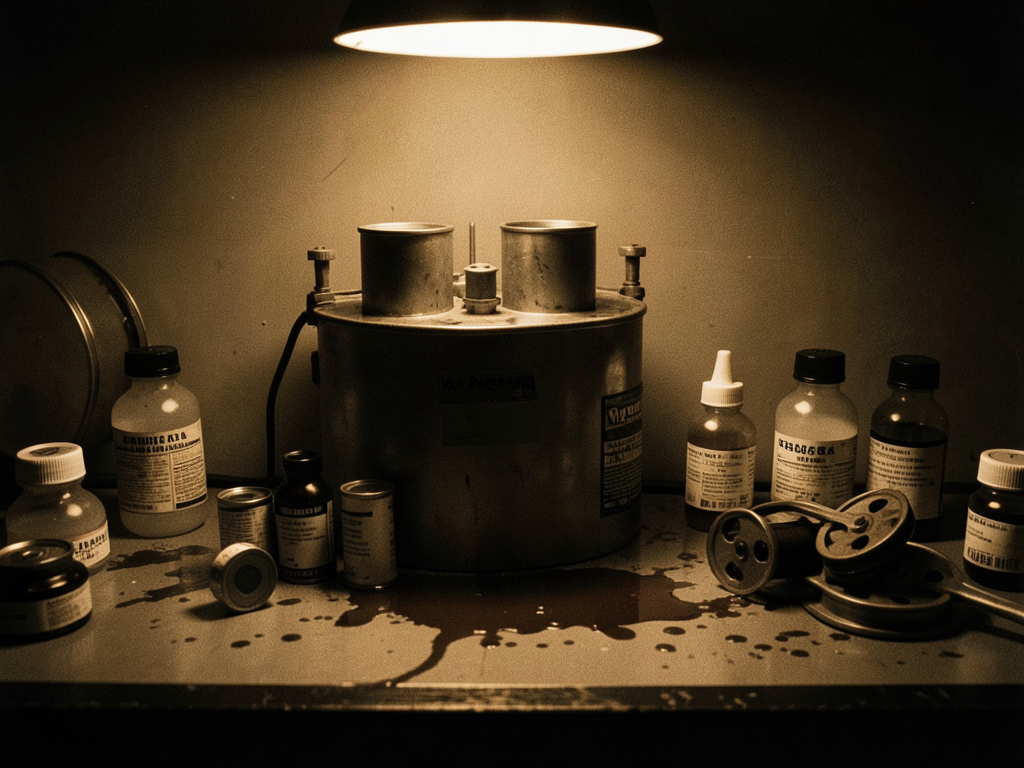
Darkroom
Where Images Are Born Twice
Film
TMAX 400
Developer
D-76 1:1
Nominal
9.5m @ 20°C
Temperature
Adjusted time: 9:30
Process Log
Silver halides reduce to metallic silver. The latent image becomes visible.
Acidic solution halts development instantly. No further reduction.
Unexposed silver dissolves. Image becomes permanent, light-stable.
Residual chemicals removed. Archival permanence begins.
On Development
The moment the shutter closes, the photograph is finished. Everything after — the tank, the chemicals, the timer — is just making it legible to the eye. The image existed the instant silver halide crystals were struck by photons. Development is translation, not creation.
Temperature matters more than most photographers admit. A degree too warm and the shadows muddy. A degree too cold and the highlights flatten. The chemistry is trying to find equilibrium. Your job is to hold the tank at exactly the right temperature for exactly the right time while pretending you're not anxious.
Agitation is the secret variable nobody talks about. Stand development (no agitation) produces compressed tonality, dreamy flat midtones. Constant agitation gives you sharp edges and high contrast and makes the grain angry. Every photographer develops a ritual. Mine is: 30 seconds continuous, then four inversions every 30 seconds. Not because it's optimal. Because it's what I do, and consistency is the closest thing to control I have.
"The stop bath is the end of possibility. Before it, the image is still in negotiation with the world. After, it's a statement."
Fixer is where the photograph becomes permanent. The unexposed silver dissolves into solution, the developed silver stays. Two minutes in Rapid Fixer and you've committed. You can turn on the lights. The print no longer flinches.
| Step | Chemical | Time | Note |
|---|---|---|---|
| Pre-soak | Water 20°C | 1 min | Opens grain, even temperature |
| Developer | D-76 1:1 | 9.5 min | Agitate 30s, then 4× per 30s |
| Stop Bath | Indicator Stop | 30 sec | Continuous agitation |
| Fixer | Rapid Fixer 1:4 | 5 min | Continuous first 30s |
| Wash Aid | HCA | 2 min | Reduces wash time |
| Wash | Running water | 10 min | Archival permanence |
| Final Rinse | PhotoFlo 1:200 | 1 min | Reduces drying marks |